NAAC accredited “B+” Grade | UGC - CPE Status | DST - FIST Status | SPPU, Pune - Best College Award (Pune Rural) | Affiliated to SPPU, Pune. | AISHE Code : C - 42032 | Reg No : L.N.P.U/P.N./A.S.S./026/1970
NAAC accredited “B+” Grade | UGC - CPE Status | DST - FIST Status | SPPU, Pune - Best College Award (Pune Rural) | Affiliated to SPPU, Pune. | AISHE Code : C - 42032 | Reg No : L.N.P.U/P.N./A.S.S./026/1970
Junnar Taluka Shivner Shikshan Prasarak Mandal
SHRI SHIV CHHATRAPATI COLLEGE
Bodkenagar, Junnar, Pune, Maharashtra, India - 410502.
NAAC accredited “B+” Grade | UGC - CPE Status | DST - FIST Status | SPPU, Pune - Best College Award (Pune Rural) | Fees Structure for BBA - (2026-27) | Affiliated to SPPU, Pune. | AISHE Code : C - 42032 | Reg No : L.N.P.U/P.N./A.S.S./026/1970
NAAC accredited “B+” Grade | UGC - CPE Status | DST - FIST Status | SPPU, Pune - Best College Award (Pune Rural) | Fees Structure for BBA - (2026-27) | Affiliated to SPPU, Pune. | AISHE Code : C - 42032 | Reg No : L.N.P.U/P.N./A.S.S./026/1970
Board of Students’ Development at Shri Shiv Chhatrapati College, Junnar, established in 1970, refers to a comprehensive set of initiatives and programs aimed at supporting the overall well-being of students. These efforts focus on enhancing students’ physical, mental, emotional, social, and academic welfare by providing services such as counselling, healthcare, scholarships, social and cultural activities, and a safe, inclusive learning environment. The primary objective is to ensure the holistic development of students and to facilitate their success in academic and personal growth.
Key aspects of Board of Students’ Development:
Academic support:Providing tutoring, study skills workshops, academic advising, and access to learning resources to help students succeed academically.
Mental health services: Offering counselling and support for students facing psychological challenges like stress, anxiety, or depression.
Physical health care: Access to medical facilities, health check-ups, and health education programs to promote physical well-being.
Financial aid: Scholarships, grants, and other financial assistance to help students afford their education.
Social and cultural activities: Organizing events, clubs, and activities to foster a sense of community and belonging among students.
Disability support: Providing accommodations and services for students with disabilities
Career guidance: Career counselling, job placement assistance, and workshops to help students plan their future careers.
Student grievance redressal: Mechanisms for students to raise concerns and address issues they face within the institution.
Residential life support: Providing safe and supportive living environments for students residing in on-campus housing.
Holistic development:To nurture students’ intellectual, social, emotional, and physical growth.
Academic achievement: To enhance students’ academic performance by addressing learning challenges and providing necessary support.
Positive campus environment:To create a safe, inclusive, and supportive learning environment.
Student well-being:To promote mental and physical health among students.
Empowerment:To equip students with the necessary skills and knowledge to navigate challenges and make informed decisions.
ANTI-RAGGING SQUAD as per UGC NORMS (रॅगिंग प्रतिबंधक पथक)
Name of the Member
Designation
Contact Number
Dr. Mahadeo Bhanudas Waghmare
Principal and Chairman
9881424835
Dr. Ravindra Devram Chaudhari
Vice-Principal and Vice-Chairman
9970214585
Shri. Subhash Shankarrao Kawade
Joint Secretary- Member
—
Shri. Pandurang Dagadu Modhave
Local Member
—
Shri. Balasaheb Shankar Maskare
Member
—
Prof. Vilas Balawant Kulkarni
Member
9970322408
Prof. Vikram Kisan Rasal
Student Development Officer
8275072304
BSD Schemes
Student Development Cell
Equal Opportunity Cell
College Grievance Redressal Cell
Anti Raging Report
Students’ Council
Circular proceedings and reports of circular issued by SDB
Seminar / Conferences / Workshops / Lecture Series / Camps etc.
Students’ Safety Insurance Scheme
Youth Festival Participation
Save The Kanyaratna
Student Incentive Plan
Samarth Bharat Abhiyan
Special Guidance Scheme
Student Personality Development Scheme
Nirbhay Kanya Abhiyan
Disaster management Training
N. C. C. (Melava)
Adventure Camp
Student Representative Camp
Special Student Workshop
Self-Employed and Skill Development Plan
Karmaveer Bhaurao Patil Earn and Learn Scheme
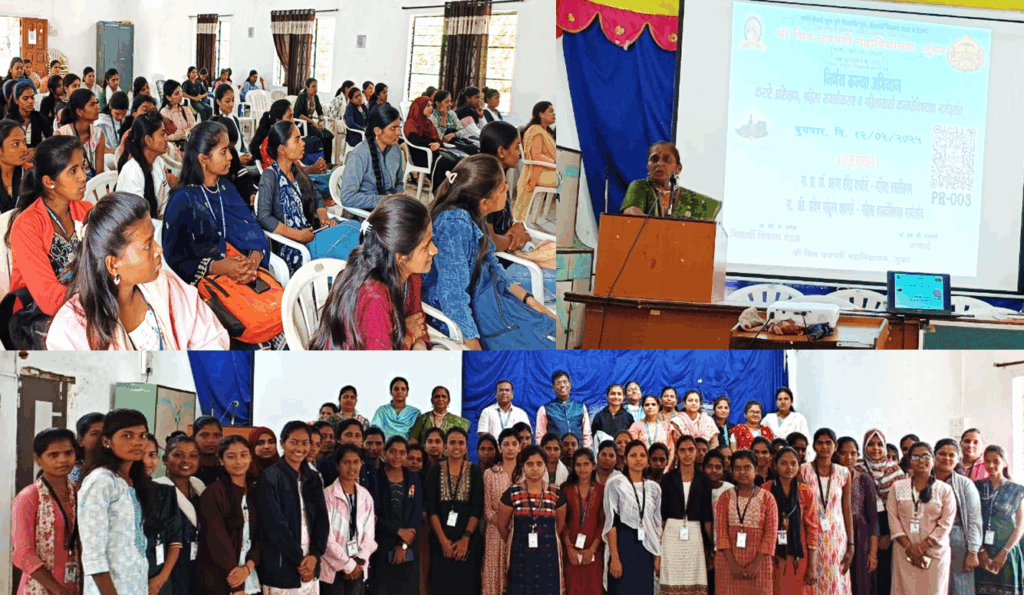
Nirbhay Kanya Abhiyan (Fearless Girl Campaign):
This scheme is an initiative introduced by Savitribai Phule Pune University to develop the self-confidence, personality, and overall empowerment of lady students, particularly those coming from rural areas and socially deprived sections of society. The scheme recognizes that marginalization and deprivation are compounded for women, especially those belonging to backward or scheduled castes.
Objectives of the Scheme:
To develop a critical and independent mind-set among lady students.
To foster self-confidence and a sense of commitment towards society.
To empower them through training in health, legal rights, social awareness, and self-employment opportunities.
To enhance their social participation and leadership capabilities.
Key Features:
Open to all regular lady students enrolled in affiliated colleges/institutes of the University.
Training is provided in various life skills, legal literacy, health awareness, self-employment, and social engagement.
The University provides financial assistance to colleges for organizing these activities.
Background Data:
Out of the 6 lakh students enrolled across various courses at the University, over 1.5 lakh are lady students, with the majority hailing from rural backgrounds. This scheme plays a crucial role in uplifting and empowering these students, ensuring they become confident, self-reliant, and socially responsible individuals.
Implementation Process:
Eligibility and Participation:
Open to all regular students from affiliated colleges/institutes of the University.
Participation is voluntary, and selection is made based on applications.
Application Procedure:
Interested colleges must submit proposals to the Director, Board of Students’ Welfare by 1st August every year.
Upon approval, the activity is implemented, and the list of selected participants is forwarded through the proper channel.
Group Formation and Organizing College:
2 to 4 geographically close colleges/institutes form a cluster.
One organizing college is selected by the Director, Board of Students’ Welfare.
A total of 40 students from the group are selected.
The organizing college is responsible for coordinating and conducting the program.
Program Format:
A one-day workshop/seminar/camp is conducted.
Activities include self-defence training, motivational talks, sessions on legal awareness, health, and personal safety.
The organizing college must submit a detailed programme in advance and a report post-completion.
Funding and Audit:
The University provides financial assistance for conducting the activity.
10% of the total expenditure must be borne by the college.
All necessary documents related to the activity and financial records must be submitted during the central audit.
Payments are made after satisfactory submission of audit requirements.
Karmaveer Bhaurao Patil Earn and Learn Scheme
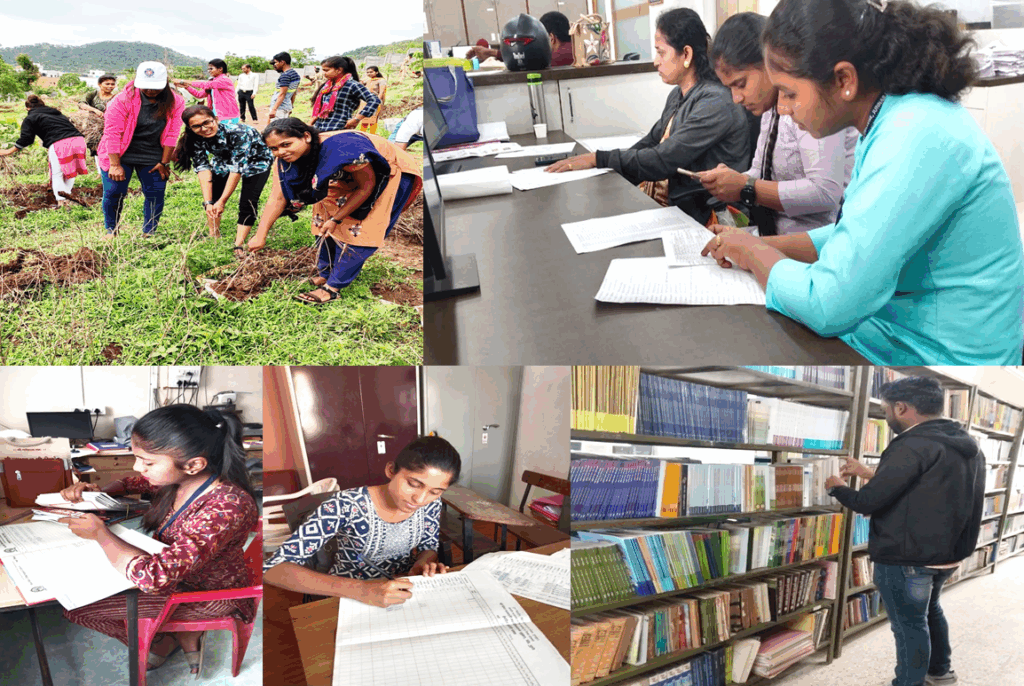
The “Earn and Learn Scheme” is a unique initiative implemented to support students from economically weaker sections, enabling them to earn while they learn in a safe and supportive environment provided by the institution. Each year, hundreds of deserving students benefit from this scheme, which offers not only financial support but also helps in building a sense of dignity, responsibility, and work ethics.
Objectives:
To support economically backward, meritorious, and needy students, especially those from rural areas.
To develop students into multifaceted personalities with academic excellence and a commitment to an equitable society.
To bridge the gap between rural and urban India by making higher education accessible to the poor and marginalized.
To inculcate the value that no work is big or small, and to develop a positive work culture and right attitude among students.
To keep youth gainfully employed, allowing them to contribute meaningfully to society.
Key Features of the Scheme:
The scheme is flexible, based on the vision of former Vice-Chancellor Dr. Narendra Jadhav, allowing work opportunities to any student who needs them.
It offers a paradigm shift in viewing higher education – not merely as a privilege, but as a right accessible to all.
10% of the total expenditure on this scheme is borne by the college, ensuring institutional involvement.
Nature of Work:
Technical Work:
Basic computer operations
Handling office machines like photocopiers
Working at telephone booths or reception desks
Field Work:
Gardening and maintenance of green spaces
Looking after newly planted trees
Campus cleanliness and upkeep
Maintenance of playgrounds and open areas
Working Hours and Payment:
Each student is expected to work for three (3) hours daily.
Students are paid an honorarium of ₹55 per hour (as per revised rates effective from 1st February 2017).
Payment is made based on attendance sheets maintained by the institution.
Students must open a bank account at their respective places for direct payment through cheques.
Accounting and Audit:
At the end of the academic year, each college/institute must submit annual accounts for the scheme.
A central audit is undertaken by the University to ensure transparency and proper utilization of funds.
This scheme not only provides financial relief to deserving students but also fosters a sense of self-reliance and social responsibility, aligning with the core vision of inclusive and equitable education.